
Hip pain can be confusing. One day it feels tight but manageable… the next it’s sharp, catching, or stopping you from training properly.
For most people, the biggest challenge isn’t the pain itself — it’s knowing what to do next.
Should you push through it?
Rest it?
Or get it checked?
This is where people get stuck. They either ignore it and hope it settles… or they stop everything completely and lose progress — without ever addressing the real issue.
This blog will help you understand when you can manage hip pain yourself, and when it’s time to get it properly assessed.
Step One: What Type of Hip Pain Are You Dealing With?
Before deciding what to do, you need a rough idea of what you’re dealing with. Not all hip pain is the same. Some symptoms point towards muscle or load-related issues, while others suggest the joint itself may be involved.
For example:
- A feeling of tightness or pulling is often muscular
- Pain that builds with activity can be load-related
- Sharp, catching pain deep in the hip may indicate joint involvement (such as impingement)
If you’re unsure whether your pain is coming from the hip joint or surrounding muscles, it’s important not to guess.
Start with our Self-Assessment Guide to help you identify what type of problem you’re dealing with and what your next step should be.
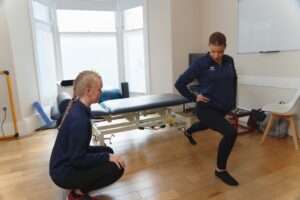
Step Two: How Is Your Hip Responding to Movement?
One of the biggest mistakes people make is focusing purely on how much pain they feel.
What matters more is how your pain behaves over time.
If your hip pain:
- Warms up and improves as you move
- Settles within 24 hours after activity
- Doesn’t significantly change how you move
…then you’re often dealing with something that can be managed with the right approach.
However, if your pain:
- Gets worse the more you train or stay active
- Lingers into the next day or is progressively worsening
- Starts to change how you move (limping, shifting weight, avoiding certain positions)
…then your body is telling you it’s struggling to cope with the load.
That’s when you need to pay closer attention.
Step Three: Should You See a Specialist?
This is the question most people actually want answered.
There are certain signs where getting a professional assessment is the right decision.
If you’re experiencing:
- Sharp or catching pain in the hip
- Pain deep in the joint that doesn’t ease with movement
- Ongoing symptoms that aren’t improving
- Pain that keeps coming back despite rest or exercise
- Reduced range of movement or stiffness that feels “blocked”
…it’s worth getting it properly assessed.
These symptoms can point towards joint-related issues, such as impingement, which often need a more structured approach.
On the other hand, if your symptoms are more:
- Tightness or pulling
- Mild discomfort that improves with movement
- Predictable and not worsening
…you may be able to start by managing it yourself, as long as you’re doing the right things.
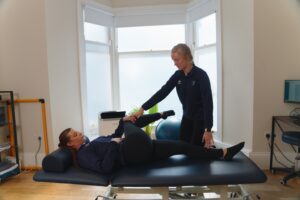
Step Four: Don’t Guess — Use a Structured Approach
This is where most people go wrong. They either rest completely and lose strength and capacity, push through pain without understanding what’s actually causing it, or follow generic advice that doesn’t match their specific problem.
The reality is that two people with “hip pain” can need completely different solutions, which is why we always recommend starting with clarity.
Use our Self-Assessment Guide to:
- Differentiate between muscle vs joint-related pain
- Identify movement restrictions
- Understand whether you’re dealing with a strain, tightness, or something more complex
From there, you can follow the right plan — rather than guessing.
How This Links to Your Activity
Hip pain rarely exists in isolation. It often shows up during specific movements or activities.
If your pain is triggered by something specific, it’s worth exploring that further:
- If you feel pain when squatting → read Hip Pain When Squatting: Causes, Symptoms, and How to Fix It
- If it comes on during running → read Hip Pain When Running: Causes, Symptoms & How to Fix It
- If you’re unsure whether it’s hip or groin-related → read Hip or Groin Pain? Here’s How to Know the Difference
- If it keeps coming back → read Why Hip Pain Keeps Returning (And How to Finally Fix It)
These will help you understand the why behind your pain — this blog helps you decide what to do next.
When to Stop Guessing
If your hip pain is:
- Not improving
- Coming back repeatedly
- Affecting your training or day-to-day life
- Making you hesitant to move
…it’s usually a sign you need more than trial and error.
Getting it assessed early is far easier than dealing with something long-term.
At ProSport Physiotherapy, we don’t just look at your hip — we look at how your whole body is working together.
That includes:
- How you’re loading through your hips
- What other areas might not be doing their job properly
- What’s causing your hip to overwork in the first place
Take Control of Your Hip Pain
Most hip pain isn’t usually a sign that something is seriously damaged; more often, it’s your body being pushed beyond what it can currently tolerate. Once you understand that, the decision-making process becomes much clearer. It’s no longer about whether you should rest completely or push through the pain, but about knowing when to adjust your activity, when to gradually build things back up, and when it’s the right time to get professional help.
If you’re unsure where you currently sit, that’s your starting point, begin with the Self-Assessment Guide and take the first step towards getting back to moving pain-free.
This is part of The Resilient Athlete
The system we use to get athletes moving with confidence again. Here is where to go from this article.
Book an assessment and get a plan built around you.
A generic plan only gets you so far. An online assessment finds the root cause with you and tells you exactly what to do next.