The Lion. You.
Your conscious self. You set the intention and lead the kingdom. Here is the humbling part. You are often the last to know what the others have already decided.

This is your guide to the whole method. The key ideas from the book, and how to actually use them, without the homework.
By the end you will understand why you can be pain free and strong yet still not feel right. And you will know the exact sequence that fixes it.
You're strong. You're mobile. You've done the rehab. But when it matters, something still holds you back. Maybe you keep breaking down at the same point. Maybe you're tired of managing your body and want to trust it again.
Whether you're a weekend runner or professional athlete, the nervous system follows the same rules. The kingdom works the same way.
If you're serious about getting this right and not just patching it up until next time, keep reading.
You did the rehab. You got strong. The scan is clear. And yet part of you still holds back.
You hold your breath on certain movements. You double check every rep. You feel something that is not quite right, even though everything tests fine.
That gap has a name. We call it the hidden performance leak. The space between what your body can do and what it actually does when it matters.
Most athletes think they are playing a game of strength, endurance and skill. The real game is happening somewhere else. Inside your nervous system. And if you do not know the rules, you will never fully let go.
Your nervous system is a lightning fast performance computer. It decides how you move before you are ever aware of it.
It is not just following your orders. It is making split second calls about one thing above all else. Are you safe.
When it trusts a movement, you flow. When it does not, it pulls the handbrake. Tightness, hesitation, that lingering thought in the back of your mind. None of that is weakness. It is your nervous system following its own rules.
Learn to speak its language and everything changes. That is what this method is about.
To make this simple, think of your body as an animal kingdom. Seven characters, each with a job. When they work together, movement feels effortless. When they argue, even simple movements feel like a fight.
Your conscious self. You set the intention and lead the kingdom. Here is the humbling part. You are often the last to know what the others have already decided.
Your thoughts and emotions. They never stop asking. "What if it goes again?" or "What if I am stronger than before?" Same voice, very different questions.
Your memory and beliefs. It never forgets a pain or a setback. It does not store facts, it stores stories, and it tells them on repeat until they feel like truth.
Your threat detector. It knows two words. Safe, or danger. It fires in milliseconds, long before you are aware of it.
Your eyes, ears and balance, gathering what is happening around you.
It decides what information reaches you. Tune it to look for pain, and pain is what it finds.
Your muscles and the millions of sensors inside them. It executes movement automatically. It does not think. It just follows the plan it is handed.
Scattered through the octopus are thousands of mini lizards, sensors in your muscles asking their own question. Is this safe. When they get nervous, they can lock a movement up before your conscious mind even knows something is wrong.
Every movement you make runs through three steps.
You set the goal. "I am going to sprint." "I am going to lift this."
In milliseconds, the whole team weighs in. The elephant recalls last time. The lizard scans for danger. The mini lizards report the state of the tissues. The hawk filters. This is where movement is really decided.
Your muscles carry out whatever plan they are handed. If the plan says danger, they brace before you even move. If it says safe, they flow.
Here is what traditional rehab misses. It trains the octopus. It makes the muscles stronger. But if the plan is built on fear and old memories, strong muscles still move badly. It is like driving with the handbrake on.
Change the plan at its source, and the octopus does the rest on its own.
Picture an eight person rowing crew. You could test each rower alone. Their power, their endurance. But that tells you nothing about whether they can win a race together.
What matters is timing. Shared workload. Nobody overworking, nobody slacking. That is exactly how your muscles work.
This is why "just strengthen your weak muscles" so often fails. Making each rower stronger does not fix a timing problem. It just gives you faster chaos. I have seen professional athletes squat enormous numbers and still break down, because in the unpredictable chaos of sport, the compensations get exposed.
The strongest athlete is not always the most resilient. It is the one whose muscles work together like a world class orchestra.
Every time your foot hits the ground running, your body takes a force of two to three times your body weight. In a resilient athlete that force is shared. Every muscle takes its bit, no more, no less. When it is not shared, a couple of muscles carry everything, and over time they break down.
The goal is not more force. It is control. What we call force steadiness. Think of carrying a full cup of coffee without spilling. That is not strength. That is precise control.
This is where we part ways with the traditional approach. And it is the bit people get wrong about us.
The old model says find the weak muscle and make it stronger. Stretch the tight bit. Add some stability work. Repeat.
None of that is wrong. It is just incomplete. It trains the rowers. It does nothing for the timing.
So let us kill the obvious objection right now. We are not anti-strength. Strength matters. The difference is sequence.
Build strength on top of poor coordination and you get faster chaos. A stronger rower still pulling out of time just drives the boat off course harder. That is how strong athletes still break down.
Build the coordination first, then add the strength, and something changes. Now the strength lands. Your body knows how to share it, when to fire, where to send the force. The strength you build actually transfers to your sport.
So strength work is not the enemy. It is the reward. You earn it once the crew is rowing together. Coordination first. Then strength you can actually use.
Every drill in the programme follows these five rules. They are what make our exercises look different from anything you have tried. They are non negotiable, because they are how we get your nervous system to update.
We put you in positions where you might lose your balance. That wakes every animal up, from the octopus to the lion. No lizard attention, no lasting change.
We place your body so the key muscles have no choice but to engage. Fail to use them and you lose your balance. No room to cheat.
When your hip extends, your weight naturally rolls from heel to midfoot to forefoot. That is how you are wired. Most approaches tell you to push through your heel, which fights your own body. We use the pressures that match how you actually move.
Your nervous system is clever at avoiding tissues it does not trust. It shifts to the heel, snaps the knee straight, arches the back. We take those shortcuts away, so the tissues you have been avoiding have to do their job.
This is the big one. Tension is not just about how much load your tissues handle. It is about how your whole system copes with stress. We help your body learn that tension is safe, so it stops fearing it in the split second it is needed most.
Think of building a toy for a child. Before you hand it over, you make sure it can survive being dropped, thrown, and stepped on. You reinforce the weak spots. Only once it survives the real world do you call it resilient.
Your body is the same. We build robustness first. A system that can handle the load of real movement without breaking down. Then we add speed, chaos and the unpredictable demands of your sport. That is resilience. Bending under real world stress, and bouncing back.
You cannot skip the first part. Robustness is the base of the pyramid. Everything else sits on top of it.
The programme moves through three stages, in order. Each one earns the next.
Tension without movement. Like slowly turning the lights on before the day starts. This reconnects you with tissues that have gone offline, without setting off the alarm.
Now we restore the teamwork. These drills load your tissues in positions where they cannot cheat, so your rowing crew learns to work together again.
Finally, force absorption. Most injuries happen when you are slowing down, absorbing and redirecting force, not speeding up. This is the piece most people skip, and it is the one that makes you truly resilient.
You know it is working when the drills go from rigid to relaxed. Your breathing stays calm. The movement speeds up on its own. The effort drops. That is your nervous system shifting from protection to performance.
Here is something that took me years to accept. Restoring the tissues is often the easy part. The stubborn stuff lives deeper in the kingdom, and it is usually the non physical stress that causes the most carnage.
Your nervous system has one job above all others. Keep you safe. Not move you well. Safe. So if any animal senses danger, real or not, it picks the safe option over the good one, every single time.
That is why you can be fully healed and still not move right. Take a hamstring you tore a year ago. The tissue is fine. But the elephant remembers the pain. The lizard flags every stretch as a threat. The monkeys whisper about it going again. So your body quietly under uses it and loads everything else instead. You can stretch and strengthen that hamstring forever. If the rest of the kingdom is not on board, your nervous system will not let you use it properly.
So we work the other animals directly. This is not a nice extra. For the stubborn cases it is the whole game. Here is how.
Your lizard does not understand words. Telling yourself to relax does nothing. But it is exquisitely tuned to your breath. Slow the breath down and you tell it, in the only language it speaks, that you are safe. The book walks you through the exact ones we use:
Your elephant does not store facts. It stores stories and images, and replays them on a loop until they feel like truth. So we change the story and the pictures:
Your monkeys never stop asking questions. That is their whole language. You cannot silence them, so you aim them. Swap "what if it goes again?" for "what if I come back better than before?" Same chatter, pointed at your goal instead of your fear. Ask a better question and your whole system goes looking for a better answer.
None of this runs on hope. You do not wake up one morning and feel confident. You show your nervous system it is safe by doing the work, on the mat and in your head, again and again, until the belief catches up. The work comes before the belief. Always.
This method was built over seventeen years working with elite athletes, including two Rugby World Cup finals with England Rugby. The same approach that keeps professional athletes on the pitch is what you have just read.
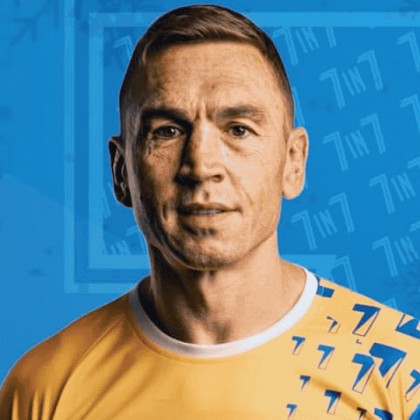
"These are the exact exercises and techniques I have used with ProSport Physiotherapy to help build resilience in preparation for my fundraising challenges."
Your body is not broken. Your strength is not the issue. What holds you back is conflict in your kingdom. Sort that, and you do not just get back to moving. You unlock a level you did not know was there.
Take Me To The Self-Assessment