
You wake up, take your first few steps, and feel it straight away. A sharp pain under your heel.
It eases as you move, but comes back after training, or builds through the day.
Most people call this plantar fasciitis.
But that’s not always what it is.
At our clinics, heel pain is one of the most commonly misidentified issues we see, especially in athletes. Runners, footballers, lifters, and even regular gym-goers all present with similar symptoms, but very different underlying problems.
From a physiotherapy perspective, accurate identification is the first step towards a successful recovery.
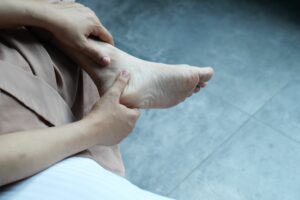
Why Heel Pain Gets Misdiagnosed
The underside of the heel is a small area with multiple structures sitting close together. When something becomes irritated, the symptoms can overlap in a way that makes everything feel the same on the surface.
Most advice online treats heel pain as one condition. Stretch it, roll it, rest it.
But in reality, there are usually three different drivers:
- The plantar fascia
- The heel fat pad
- Nerve-related irritation
Each behaves differently. Each responds to different loading strategies. And each requires a different approach to recovery.
The 3 Most Common Causes of Heel Pain
1. Plantar Fasciitis
This is the most well-known and most commonly assumed diagnosis.
The plantar fascia is a thick band of tissue running from your heel into your arch. It helps store and release energy during movement, particularly in running and jumping.
When it becomes overloaded, you’ll typically notice:
- Pain under the heel or into the arch
- Stiffness and sharp pain with the first steps in the morning
- Symptoms that ease as you move, then return after activity
- Irritation linked to increases in training load
This is usually a load management issue. The tissue is being asked to do more than it currently has the capacity for.
2. Fat Pad Syndrome
This is where a lot of people get caught out.
The fat pad sits directly under your heel and acts as a natural shock absorber. When it becomes irritated or compressed, the symptoms can feel very similar to plantar fasciitis, but the behaviour is different.
Typical signs include:
- Pain directly in the centre of the heel
- A deep, bruised sensation rather than a pulling pain
- Symptoms that worsen with prolonged standing or walking, especially on hard surfaces
- Little improvement as you “warm up”
This type of pain doesn’t respond well to aggressive stretching or early high loading. In fact, that often makes it worse.
3. Nerve-Related Heel Pain
Less common, but important not to miss.
Nerve irritation around the foot and ankle can refer pain into the heel and arch, sometimes mimicking both plantar fasciitis and fat pad pain.
You’re more likely to be dealing with nerve involvement if you notice:
- Burning, tingling, or sharp pain
- Symptoms that travel into the arch or along the foot
- Sensitivity to position, such as sitting or stretching
- Pain that doesn’t behave consistently with load
This isn’t just a tissue capacity issue. It involves the nervous system, which means the approach to rehab needs to be more specific.
| Feature | Plantar Fasciitis | Fat Pad Syndrome | Nerve-Related |
|---|---|---|---|
| Pain location | Heel into arch | Centre of heel | Heel, arch, or spreading |
| Morning pain | Sharp, eases with movement | Dull, doesn’t ease quickly | Variable |
| Worse with | Increased load, long runs | Hard surfaces, prolonged standing | Certain positions, stretching |
| Sensation | Pulling, aching | Bruised, deep | Burning, tingling |
| Response to warmup | Usually improves | Minimal improvement | Inconsistent |
How to Start Telling the Difference
There are a few simple patterns that can point you in the right direction.
- Pain with first steps in the morning that eases with movement often points toward the plantar fascia
- Pain that builds with standing or walking on hard surfaces, and feels more like bruising, suggests the fat pad
- Pain that includes tingling, burning, or spreading sensations may involve a nerve
But these are not definitive tests.
There is a lot of overlap between these presentations, and this is where most people go wrong. They pick the closest match, follow generic advice, and end up stuck in a cycle of slow or incomplete recovery.
Why Getting This Right Matters
These conditions don’t just feel similar. They respond very differently to treatment.
Load the wrong structure too early, and symptoms get worse.
Avoid loading when it’s actually needed, and the tissue becomes weaker and more sensitive.
For example:
- Stretching aggressively into a nerve-related issue can increase irritation
- Loading a sensitive fat pad too quickly can prolong pain
- Resting plantar fasciitis for too long reduces its ability to tolerate load
This is why so many people feel like they’ve “tried everything” without success. The issue isn’t effort, it’s direction.
Start With a Clear Assessment
Rather than trying to guess based on isolated symptoms, the more effective approach is to look at the full picture:
- How your foot handles load
- How symptoms respond to movement
- How your mechanics influence stress through the heel
That’s exactly what our self-assessment is designed to do.
It takes you through a structured process to help identify what’s most likely driving your pain, and what your next steps should look like.
→ Start your self-assessment here.
When to Get It Checked Properly
Self-management works well in many cases, but there are clear signs you should get assessed:
- Pain hasn’t improved after a few weeks of appropriate management
- Symptoms are getting worse rather than better
- You’re experiencing tingling, numbness, or spreading pain
- The pain keeps returning when you go back to training
Recurring heel pain is rarely random. It’s usually a sign that the underlying issue hasn’t been properly addressed.
Heel pain is often labelled as plantar fasciitis, but that’s only part of the picture.
The plantar fascia, fat pad, and surrounding nerves can all produce very similar symptoms, but they require very different approaches to recovery.
Getting clear on what you’re dealing with is what moves you from guessing to progressing.
Start with the right assessment, follow a structured plan, and what feels like a stubborn, recurring problem becomes something you can actually resolve.
FAQs
Can I run with plantar fasciitis?
Yes, with modifications. Gradual loading helps the tissue adapt, while complete rest can make it worse. A structured return-to-running plan is better than full rest or pushing through pain.
What’s the difference between plantar fasciitis and fat pad syndrome?
Plantar fasciitis causes sharp pain that eases with warm-up and increases with training. Fat pad syndrome feels deep and bruised, doesn’t improve with warm-up, and worsens on hard surfaces. Accurate diagnosis is important for proper treatment.
This is part of The Resilient Athlete
The system we use to get athletes moving with confidence again. Here is where to go from this article.
Book an assessment and get a plan built around you.
A generic plan only gets you so far. An online assessment finds the root cause with you and tells you exactly what to do next.