
There’s a difference between foot pain that shows up in the morning, or after training, and foot pain that arrives during a run.
When something flares while you’re actually moving — mid-session, on a specific surface, at a certain point in a long run — your body is communicating something specific. The location, timing, and behaviour of that pain are diagnostic clues. Reading them correctly is what determines whether this resolves quickly or becomes a recurring problem.
At our Yorkshire clinics, we see runners and field sport athletes regularly who’ve been managing “foot pain” generically for months. They’ve stretched, rested, rolled. The pain keeps coming back because the signal was never properly read.
Where It Hurts Tells You Something
Heel pain that worsens mid-run often points to fat pad irritation or fascia load issues. Early comfort followed by late pain suggests the tissue breaks down under accumulated stress.
Arch pain during longer or fatigued runs usually signals midfoot weakness. Intrinsic arch muscles tire, shifting stress to the fascia—indicating a strength deficit rather than structural damage.
Outer-edge foot pain with direction changes or uneven surfaces may involve peroneal tendons or lateral column stress, often overlooked as it doesn’t match classic plantar fasciitis.
Burning, tingling, or shooting pain in the arch or toes hints at nerve involvement. Aggressive stretching or loading can worsen it, so assessment is needed.
Forefoot or ball-of-foot pain often stems from metatarsal stress or joint capsular irritation. Pressing on the area can confirm it, and proper assessment is essential before increasing training load.
When During the Run Also Matters
Pain from the start that doesn’t warm up: the foot hurts from step one and doesn’t ease — suggests the tissue is already sensitised before the run begins. This is a sign the cumulative load from previous sessions hasn’t been absorbed. Training volume or frequency needs to come down before any rehab work will have traction.
Pain that appears after a specific distance: fine for the first three miles, then consistently painful — indicates a threshold being crossed. The tissue can handle a certain amount before breaking down. This threshold is your current load ceiling, and training needs to be built around it rather than beyond it.
Pain that only appears under fatigue: late in a long run, or in a second session of a double training day — reflects a neuromuscular control issue as much as a tissue capacity one. When muscles fatigue, mechanics change, load distribution shifts, and the foot absorbs more than it should. Rehab needs to address the fatigue response, not just baseline strength.
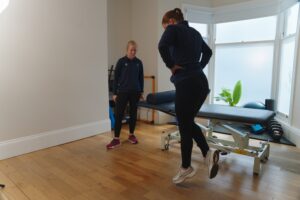
What to Do When Foot Pain Appears During Training
Don’t run through neurological symptoms. Burning, tingling, or numbness during a run is the one presentation where continuing regardless is not advisable. Get it assessed.
Reduce, don’t stop. For mechanical foot pain without nerve symptoms, complete rest is rarely the right answer. Dropping volume and intensity to a level where pain stays below a manageable threshold — while beginning structured rehab — maintains fitness and allows the tissue to adapt.
Don’t change footwear reactively. Switching shoes mid-training block in response to pain without understanding the cause is a common error. Footwear can contribute to foot pain, but it’s rarely the primary driver — and changing it without assessment can mask symptoms rather than resolve them.
Track the pattern. Note when during the run pain starts, what surfaces trigger it, whether it’s worse in certain footwear, and how it behaves the day after. This information is genuinely useful in assessment and will shorten the diagnostic process significantly.
When to Stop Running and Get Assessed
Some foot pain during running can be self-managed with load modification and structured rehab. But see a physiotherapist if:
- Pain starts earlier in the run with each session — the threshold is dropping
- You’re altering your gait to protect the foot, even slightly
- There are any neurological symptoms — tingling, burning, numbness
- Pain is still present at rest or the morning after a run
- You’ve already modified training and it hasn’t improved in two to three weeks
The pattern of worsening threshold is the most important warning sign. A foot that hurt at mile five last week and hurts at mile two this week is not managing — it’s deteriorating.
For a structured assessment of what’s driving your foot pain and what it means for your training, our self-assessment tool is the right starting point.
→ Start your self-assessment here.
Or if the pattern is complex, recurring, or involves any nerve symptoms, book directly.
→ Book at our Yorkshire clinics.
Where This Fits With Your Other Foot Issues
If you’re trying to identify whether your heel pain is plantar fasciitis, fat pad syndrome, or nerve-related, our heel pain diagnostic post covers that in detail.
If you’ve already been diagnosed and want to understand why it keeps recurring despite rehab, our post on why plantar fasciitis keeps coming back addresses the specific drivers of recurrence and what to do about them.
This post is for the runner who feels something during a run and wants to understand what the signal means — before it becomes the kind of chronic problem that requires months to unpick.
Read the signal early. Act on it specifically. That’s what keeps you running.
This is part of The Resilient Athlete
The system we use to get athletes moving with confidence again. Here is where to go from this article.
Book an assessment and get a plan built around you.
A generic plan only gets you so far. An online assessment finds the root cause with you and tells you exactly what to do next.