
You did the stretches. You rested. You followed the basic exercises. For a while, it felt better. Then, weeks or months later, the heel pain is back.
Whether you’re a professional athlete, a runner, or just someone who wants to train consistently, recurring plantar fasciitis is one of the most frustrating injuries to deal with. It’s not just the pain, it’s the uncertainty. You start to question your movement, your running, and whether your foot will ever feel normal again.
At our clinics, we see this pattern all the time. From elite athletes to everyday gym-goers, the story is the same: the pain settles, but the problem doesn’t. And that’s where most people get it wrong.
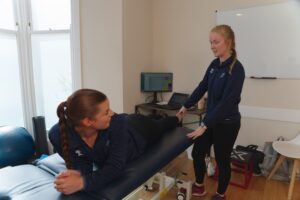
Why Plantar Fasciitis Keeps Returning
Chronic plantar fasciitis is rarely just about the fascia itself. Most of the time, it comes down to how the body handles load, distributes force through the foot, and manages the kinetic chain from hip to toe.
Here’s what we see most often:
1. Load Mismanagement
The fascia may feel better, but that doesn’t mean it’s ready for running, jumping, or prolonged standing. Returning to activity too soon or only partially loading the foot, creates repeated stress cycles.
Healing is not the same as full recovery. The plantar fascia needs progressive loading to regain resilience, just like the ankle or glutes after injury. Without this, reinjury is almost inevitable.
2. Poor Foot Pressure & Midfoot Muscle Function
The “forgotten muscles” in the foot—those that support the arch and control midfoot mechanics—play a huge role in plantar fascia health.
- Weak or underactive midfoot muscles shift stress onto the fascia.
- Foot pressure patterns become inefficient, increasing the risk of flare-ups.
Exercises that restore natural foot pressure and midfoot function are critical to breaking the cycle.
3. Kinetic Chain Compensations
Your foot doesn’t work in isolation. Hip, glute, and ankle function all influence how forces travel through the foot.
- Weak glutes or poor ankle control force the fascia to compensate.
- Over time, these subtle adaptations become permanent, leaving the fascia vulnerable to re-injury.
This mirrors what we see with chronic ankle or glute injuries—the problem is rarely local, it’s systemic.
Signs Your Plantar Fascia Isn’t Fully Recovered
Even if the pain has gone, look out for:
- Pain after activity or running
- Stiffness on first steps in the morning
- Fatigue or aching during longer sessions
- Subtle instability or arch collapse
If you keep feeling that “something isn’t right,” it’s not in your head. The fascia may be healed, but your system hasn’t fully reset.
Rehab Principles That Actually Work
Recovery isn’t just about stretching the fascia. To prevent recurrence, your rehab should focus on three core principles:
- Restore Load Tolerance – Gradually rebuild your foot’s ability to handle running, jumping, and prolonged standing.
- Rebuild Foot Pressure & Midfoot Function – Activate the “forgotten muscles” so load is distributed naturally through the foot.
- Re-train the Kinetic Chain – Integrate ankle, glute, and hip control to reduce compensatory stress on the fascia.
For a step-by-step guide to exercises that target these principles, visit our Foot & Plantar Fascia Exercise Library and start rebuilding strength, stability, and control safely.
Start With a Self-Assessment
Not sure what’s driving your foot pain? Use our self-assessment page to identify whether your heel pain is true plantar fasciitis, a fat pad issue, or a nerve entrapment.
Structured assessment helps you know what to load, how much, and in what order—preventing flare-ups before they start.
When to See a Physiotherapist
Book an appointment at our clinics if:
- Pain persists for 3+ months
- Pain interferes with running, training, or daily activities
- You rely on taping, bracing, or modifying movement
- You experience tingling or nerve symptoms
Early, structured physiotherapy restores function, load tolerance, and kinetic chain control— reducing the chance of recurring plantar fasciitis.
Recurring plantar fasciitis isn’t random. It’s almost always caused by:
- Load mismanagement
- Poor midfoot control & foot pressure
- Kinetic chain compensations
Full recovery isn’t just about pain relief. It’s about restoring a system that works together under real-life or sport demands.
For a complete rehab framework, check out The Resilient Athlete Book. Start with a self-assessment to see where you are, follow targeted exercises to rebuild stability, or book a physiotherapy appointment to get a structured plan tailored to you.
Chronic plantar fasciitis doesn’t have to be permanent. With the right approach, your foot can come back stronger, more stable, and pain-free.
This is part of The Resilient Athlete
The system we use to get athletes moving with confidence again. Here is where to go from this article.
Book an assessment and get a plan built around you.
A generic plan only gets you so far. An online assessment finds the root cause with you and tells you exactly what to do next.