
Lateral knee pain, often called ITB syndrome or runner’s knee outside, is one of the most common complaints among athletes, especially runners, CrossFit participants, and field sports players. The repetitive impact of running, jumping, or cutting movements places continuous stress on the outside of the knee. Even when the knee itself is healthy, small inefficiencies in movement can lead to irritation over time.
Why Knee Pain Is Common in Athletes
Athletes frequently experience lateral knee pain because of the combination of repetitive loading, high-intensity movements, and complex movement patterns. Every step or stride involves not just the knee but the entire lower limb and hip working together. When this system isn’t coordinated, stress accumulates at the knee.
Over hundreds or thousands of steps, even minor inefficiencies can trigger pain, which is why lateral knee issues are so common in sports that involve running, cutting, or abrupt changes of direction.
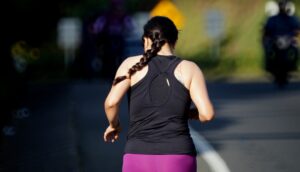
The Hip-Knee Connection
A key contributor to lateral knee stress is weakness or poor control in the hips, particularly the glute medius and tensor fasciae latae (TFL). The glute medius stabilises the pelvis and keeps the thigh aligned over the knee during dynamic movements. If it’s underactive or fatigued, the thigh can collapse inward slightly with each stride, increasing tension on the iliotibial band (ITB) and . The TFL also plays a role by pulling on the ITB, potentially overloading the lateral knee when it compensates for weak glutes.
Signs Your Knee Pain May Be Coming From Weak Hips
Hip-related issues can manifest subtly but have a clear effect on knee stress:
- Thigh collapse during single-leg balance, squats, or landings
- Pelvic drop when standing on one leg, suggesting weak lateral hip stabilizers
- Pain onset with fatigue, appearing after longer runs or repeated steps
- Knee misalignment during lateral movements, side-stepping, or changes in stride
Observing these patterns can indicate that the lateral knee pain is less about the knee itself and more about the system controlling it. For structured guidance, our ITB Self-Assessment page helps you identify whether hip control is contributing to your knee symptoms and whether professional support is needed.
How Physiotherapy Helps
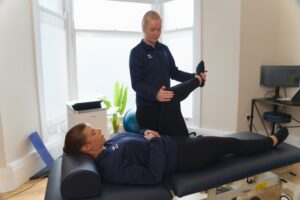
At ProSport, we take a system-wide approach to ITB-related lateral knee pain, informed by years of experience working with professional and high-level athletes. Rather than just treating the knee, we assess how the entire kinetic chain contributes to the problem: hips, glutes, core, and lower limb alignment are all evaluated in context.
Our method starts with a detailed assessment, looking at:
- Hip and glute strength, activation patterns, and coordination under movement
- Running mechanics and how the knee tracks during dynamic loading
- Movement patterns that increase lateral knee stress and
Using these insights, we develop a tailored plan that restores optimal muscle activation, improves coordination, and gradually increases load tolerance. By addressing the root causes of pain, rather than simply managing symptoms, our athletes regain confidence in running, training, and daily activity while minimizing the risk of ITB recurrence.
Preventing Lateral Knee Pain
Prevention is about system-wide control rather than just knee-specific exercises. Key strategies include:
- Strengthening and coordinating lateral hip muscles to stabilize the pelvis and thigh
- Ensuring proper knee tracking during dynamic movements and running
- Gradually increasing training load to avoid repetitive overload
- Paying attention to fatigue cues, adjusting volume, and refining running mechanics
By focusing on hip control, knee alignment, and movement efficiency, athletes can significantly reduce the likelihood of ITB friction recurring, allowing them to train and compete without interruption.
When to Seek Specialist Help
Certain signs indicate that your lateral knee pain may need more urgent attention:
- Pain that persists at rest or during daily activities
- Swelling, locking, or catching in the knee
- Pain that does not improve after several weeks of load management and foundational rehab
- Sudden weakness or inability to bear weight
If these occur, a physiotherapist or sports medicine doctor can rule out other issues, such as meniscus or ligament involvement, and create a personalized plan for recovery.
Get the Basics Right
When it comes to preventing and managing lateral knee pain, starting with foundational principles is often more effective than jumping straight into exercises. Focus first on understanding your movement patterns and how your body responds under load. Pay attention to subtle cues such as slight pelvic drops, knee drift inward, or early fatigue in your lateral hip muscles.
Learning to engage your hips and glutes consistently, even during everyday activities like walking, stepping up, or lunging, helps train your nervous system to maintain alignment and reduce strain on the ITB. Similarly, integrating gradual load progression, adding distance, intensity, or lateral movements carefully, teaches the knee to tolerate stress without provoking pain.
By establishing these basics, awareness of alignment, controlled load, and efficient hip-knee coordination, you create a stable foundation that supports all athletic activity. This approach primes the body for later progression, improves movement confidence, and reduces the likelihood of recurrent lateral knee issues.
Start by exploring our ITB Self-Assessment page to check how well your hip-knee system is functioning and whether you can begin foundational strategies on your own or should book a session with one of our physiotherapists for a personalised plan.