
Many athletes and runners worry that their foot shape, flat feet or high arches, is the root cause of foot pain. The truth? Foot structure is often less important than function. Pain, performance issues, and recurring injuries rarely come down to “arches,” and more often reflect how your foot works under load.
Debunking the Structural Myths
- Flat feet = weak feet? Not necessarily. Many people with low arches have strong, functional feet and never experience pain.
- High arches = fragile feet? High-arched feet can be stiff and less shock-absorbing, but strength and movement patterns are far more predictive of pain than arch height.
- Shape ≠ destiny. Studies show that foot structure alone is a poor predictor of running injuries. What matters is how the foot distributes load, adapts under fatigue, and interacts with the rest of the kinetic chain.
Function Over Form
What really matters is how your foot works, not what it looks like:
Load Management
- Can your foot tolerate the forces from running, jumping, or cutting without pain?
- Pain often appears when the tissue is overloaded, not because of the arch.
Foot Muscle Activation
- The intrinsic muscles of the arch and midfoot control motion and absorb stress.
- Weak or underactive muscles, regardless of arch type, increase injury risk.
Kinetic Chain Integration
- Foot function depends on ankle mobility, hip stability, and glute strength.
- Poor control higher up the chain forces the foot to compensate, often leading to pain.
Fatigue Response
- Pain that appears only late in a run or during a second session signals endurance or neuromuscular control deficits, not necessarily flat or high arches.
What This Means for Pain
- Flat Feet Pain – usually linked to fatigue, poor midfoot activation, or load mismanagement rather than the arch itself.
- High Arches Foot Pain – often related to stiffness, poor shock absorption, or inadequate foot muscle engagement, not simply the arch height.
Key takeaway: Foot shape matters far less than strength, control, and how the foot handles load. Focus on improving function, not fretting over structure.
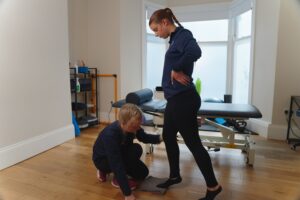
How to Assess and Improve Foot Function
- Self-Assessment: Track when pain appears during activity, what surfaces trigger it, and whether it changes with fatigue.
- Strengthening Exercises: Target intrinsic foot muscles, midfoot stabilizers, and ankle control.
- System Rehab: Include hips and glutes to reduce compensatory stress on the foot.
- Load Management: Gradually progress training intensity and volume to match your tissue tolerance.
Flat feet, high arches, or somewhere in between — what matters is how your foot works under real-life loads, not its shape. Functional strength, proper load management, and kinetic chain integration are the keys to pain-free running and athletic performance.