You’ve just finished a heavy squat session and there’s that pinching feeling in the front of your hip again. Or maybe you pushed hard in a sprint and felt something pull in your inner thigh. Is it something you can train through — or a sign you need to stop?
For athletes, hip and groin pain is one of the most common complaints we see at our clinics. And one of the most commonly misunderstood. Getting it wrong means longer recovery, reduced performance, and in some cases, a minor issue becoming a chronic one.
In this guide, we’ll break down the difference between hip impingement and groin strain, what the early warning signs look like, and what to do next.
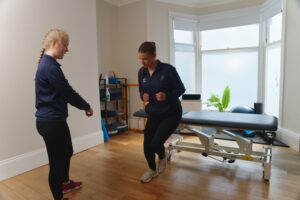
Hip Pain vs Groin Pain – What’s the Difference?
Although they’re close anatomically, hip pain and groin pain feel very different when you know what to look for.
- Hip joint pain is usually felt deep in the front of the hip, often described as a pinching or catching sensation
- Groin pain tends to be more superficial, felt along the inner thigh, and often feels like a pull or strain
A simple rule of thumb: if your pain feels deep and sharp during movement, it’s more likely joint-related. If it feels like a stretch or tear in the muscle, it’s more likely muscular.
What Are the First Signs of Hip Impingement?
Hip impingement (also known as FAI) typically develops gradually and can easily be ignored early on.
Early signs include:
- A pinching sensation in the front of the hip
- Pain when squatting deep, sitting for long periods, or bringing your knee toward your chest
- Reduced hip mobility or stiffness, especially in the morning or after training
- Clicking, catching, or locking sensations in the hip joint
For athletes specifically, symptoms often show up during:
- Squats and lunges (CrossFit / Hyrox)
- Running, especially uphill (runners)
- Rowing or cycling (endurance athletes)
Left unaddressed, this can progress from mild discomfort to persistent pain that limits performance.
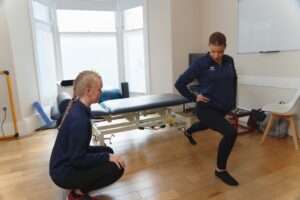
What Does a Groin Strain Feel Like?
A groin strain is a muscle injury, usually affecting the adductors (inner thigh muscles). It often comes on more suddenly than hip impingement.
Typical symptoms include:
- A sharp or pulling pain in the inner thigh
- Pain during sprinting, changing direction, or kicking
- Tenderness when you press on the inner thigh
- Tightness or weakness in the groin that lingers after training
Athletes often feel this during explosive movements or when increasing training intensity too quickly.
Key Differences: Hip Impingement vs Groin Strain
Here’s a simple way to tell the difference:
| Hip Impingement | Groin Strain |
|---|---|
| Deep joint pain | Surface muscle pain |
| Pinching sensation | Pulling/tearing feeling |
| Worse with deep flexion (squats) | Worse with sprinting/change of direction |
| Gradual onset | Often sudden onset |
| Clicking or catching | Tightness and tenderness |
Why “Just Strengthen Your Weak Muscles” Often Isn’t Enough
One of the most common mistakes we see is athletes being told to simply strengthen the hip or adductors and expect that to fix the problem. But if your muscles aren’t coordinating properly under load — firing in the right sequence at the right time — more strength just means more efficient chaos.
We regularly see athletes who have been doing hip strengthening exercises for months with little improvement. The issue isn’t always that the muscles are weak. It’s that they’re not working together properly under the demands of your sport.
The goal isn’t just strength. It’s getting your muscles working together again — with the right timing, the right control, and the right load tolerance for what you’re asking your body to do.
This is why a proper assessment matters. Without understanding why the pain is there, you risk treating the symptom and missing the cause entirely.
Which Athletes Are Most at Risk?
Different sports place different demands on the hip and groin, but they all load these structures heavily.
Hyrox and CrossFit athletes are particularly prone to hip impingement due to the volume of deep squats and lunges, combined with high training frequency that doesn’t always allow adequate recovery.
Runners and endurance athletes often develop impingement through repetitive hip flexion — the same motion, thousands of times — while groin strains are more common when adductor strength hasn’t kept pace with training load.
Field and court sport athletes — footballers, rugby players, tennis players — are at higher risk of groin strains due to the sprinting, cutting, and kicking demands of their sport.
The common thread across all of these? Most injuries come from a combination of load, movement inefficiency, and fatigue — not just tight muscles.
When Should You Be Concerned? (Red Flags)
Whether it’s hip or groin pain, certain symptoms shouldn’t be ignored:
- Pain that doesn’t improve with rest
- Sharp pinching pain in the hip joint
- Clicking, catching, or locking
- Reduced strength or mobility
- Pain affecting your ability to train or perform
If you’re unsure what’s causing your pain, you can start with our online assessment to get clarity before continuing training.
What Should You Do Next?
If you’re dealing with hip or groin pain:
- Don’t ignore it or push through sharp pain
- Modify training (reduce load, avoid painful movements)
- Start targeted rehab exercises
- Address movement patterns and coordination
You can explore our hip and groin rehab exercises to start building strength and control safely. Or if you want clarity on what’s actually going on, our online assessment is a good place to start.
If symptoms persist, book an assessment or at one of our clinics in Huddersfield, Leeds, Denby Dale, or Saddleworth for a full movement analysis and treatment plan.
FAQs
1. What are the first signs of hip impingement?
Early signs include pinching pain in the front of the hip, stiffness, reduced mobility, and discomfort during squats or sitting.
2. How do I know if it’s a groin strain or hip impingement?
Groin strains feel like a pull in the inner thigh, while hip impingement causes deep joint pain and pinching during movement.
3. Can I train with hip impingement?
You can often modify training, but continuing with painful movements can worsen symptoms. Proper rehab is key.
4. How long does a groin strain take to heal?
Mild strains may recover in a few weeks, while more severe injuries can take longer depending on load management and rehab.
5. Should I see a physio or just rest?
Rest alone rarely fixes either of these issues long-term. A physio assessment helps identify the root cause and gives you a clear plan — so you’re not just guessing how long to rest or which exercises to do.
Hip and groin pain can feel similar but they’re often very different problems.
Hip impingement is a joint issue, while groin pain is usually muscular. Knowing the difference early can help you avoid long-term injury and stay performing at your best.
If you’re unsure what’s causing your pain, start with our online assessment, explore our rehab exercises, or book a physiotherapy assessment to get back to training with confidence.
This is part of The Resilient Athlete
The system we use to get athletes moving with confidence again. Here is where to go from this article.
Book an assessment and get a plan built around you.
A generic plan only gets you so far. An online assessment finds the root cause with you and tells you exactly what to do next.