
Back pain can mean many things…But the most common reasons as to why someone may have back pain are a pulled muscle, sciatica or arthritis. There are lots of muscles in your back, whether that be upper or lower back, that can be overworked for lots of different reasons. It’s very important we work out why those muscles have been strained to reduce the risk of it happening again.
Back pain doesn’t just affect people who sit at a desk all day. Whether you’re an office worker, a parent constantly on the go, or someone who trains regularly in the gym or plays sport, back pain can affect anyone. The causes may look different, but the underlying problem is often the same—your body isn’t sharing load efficiently, and the lower back ends up doing more work than it should.
Sciatica is a pain that runs along the line of the sciatic nerve. The sciatic nerve runs from the lower back, into the hips and down into both legs. Sciatic pain normally occurs when a herniated disc puts pressure on the sciatica nerve.
Osteoarthritis is the most common type of arthritis in the back and this usually happens due to normal wear and tea
What Causes Back Pain?
Whether you’re sitting for long periods or training hard in the gym, the lower back often becomes the area that “picks up the slack” when other parts of the body aren’t doing their job properly. This is something we see across both active individuals and those with more sedentary lifestyles.
1. Working from home
Due to the pandemic things have changed within our work life and a lot more people are working from home. A lot of people are sitting uncomfy at a desk with back pain that seems to have been going on forever. Everybody always talks about the ‘perfect’ posture. There is actually no such thing as a perfect posture, for example if you are suffering from lower back pain when sitting up straight, then don’t. Relax & slouch. It’s always been drilled into us from a young age to sit up and stop slouching when in fact this could actually be making your back pain worse.
When sitting up straight, if you imagine clenching both your hands as tightly as possible, this is what’s happening with the muscles in your lower back. They are working too hard and we need to help allow those muscles to relax whilst letting other muscles in the body work a bit more. Constantly sitting at a desk can put a lot of pressure on your lower back muscles especially if you aren’t standing up to walking around every hour to alleviate that pressure.
This isn’t just limited to office workers. We often see similar patterns in people who train regularly, especially if they spend long periods sitting between sessions, travelling, or recovering. Long periods of inactivity followed by intense activity can place even more stress on the lower back.
2. Constant heaving lifting/bending
There can be many reasons as to why someone has to constantly lift/bend down during their day. It might be that they have children and are always having to pick them up or it could be they have a physically demanding job. If you are one of these people, as a therapist we can’t tell you to stop lifting or bending down because it’s something you have to do on a day to day basis. Therefore it’s really important that we find out why lifting or bending is an aggravating factor for your back pain.
This also applies to people training in the gym or doing CrossFit-style workouts. Movements like deadlifts, squats, or high-repetition exercises can place repeated load on the lower back—especially when fatigue sets in and movement quality starts to drop.
For example, at the front of your body you have your abdominal muscles and then at the back, your lower back muscles. Both have to work equally, therefore abdominals have to work at 50% and lower back muscles have to work at 50%, if the back muscles are working at 80% which is usually the case for people with lower back pain that means the abdominals only have to work at 20%. As you can see the lower back muscles are working way too hard and need to relax, and we need to teach the abdominals a little harder to take the strain off the lower back. Now this is only one example and it will not be an explanation for everybody, it might be other muscles in the body not working efficiently enough, meaning the lower back has to work harder than normal.
3. Previous injuries
Previous injuries can play a massive part as to why someone may have back pain. The injuries you have sustained previously can put a big impact onto other muscles and joints in the body. This is because when you are in pain the body will naturally want to find a way to try and get out of that pain, this means other parts of the body may then have to work a little harder to help compensate. This therefore means that those muscles/joints that have taken the compensation have more load going through them than normal, which can then lead to them also becoming injured.
This is something we see regularly in both athletes and non-athletes. A previous ankle sprain, knee injury, or even a shoulder issue can subtly change how you move, whether that’s during sport, in the gym, or during day-to-day activities. Over time, these small changes can lead to the lower back taking on more work than it should.
For example, one of our patients, ruptured his left Achilles a couple of years ago and spent a long time in a boot. He only did a small amount of rehab at the beginning, he does have a couple of niggles from the Achilles every now and again but he can do day to day activities without any issues. He came to visit the clinic about a left knee injury that has been ongoing for a couple of months, he doesn’t know how it started, it’s just got worse over time. The assessment showed that he has limited range of movement is his left ankle compared to the right and is struggling to use the muscles around the left ankle. This means that since the Achilles rupture, the muscles around the left knee have been having to work a lot harder because the muscles around the ankle haven’t been working as efficiently as they should, and overtime causing the left knee to be painful. He is now having treatment to restore strength within the muscles around the ankle but also making sure that all the muscles in the lower leg are all working together and equally.
Why Do Active People Still Get Back Pain?
One of the biggest misconceptions is that back pain only affects people who are inactive. In reality, we see a lot of active individuals and athletes with back pain.
The difference is not activity level—it’s how well your body is moving and sharing load. Training more doesn’t always solve the problem. In some cases, it can actually expose imbalances or inefficiencies that have been building over time.
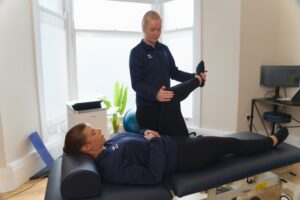
Our Approach: Looking Beyond the Pain
At the clinic, we don’t just look at where your pain is—we look at why your lower back is having to work harder than it should. That might be due to poor movement patterns, muscle imbalances, previous injuries, or a combination of all three.
If you’re unsure what’s causing your back pain, the next step is understanding whether it’s mechanical or something more complex, and identifying what areas of your body may not be contributing effectively.
This is why it’s so important that when you have an injury you seek the correct advice and treatment. If your injury is treated correctly straight away then it reduces the risk of it having an impact on the rest of the body.
Whether your back pain comes from sitting at a desk, lifting at work, or training in the gym, the most important step is understanding the root cause. Once you do that, you can put the right plan in place to not only get out of pain—but keep it away long term.
When to get urgent help. Most back pain settles with the right rehab, but some does not. Get same day emergency care if you notice any loss of bladder or bowel control, numbness around the saddle or inner thighs, or sudden weakness in both legs. Book an urgent assessment rather than self managing if you have unexplained weight loss, pain that is worse at night and unrelated to movement, a fever, a history of cancer, or this is your first significant episode over the age of 50.
If you feel that you fit into any of the above then now is the time to get your pain free life back!
To book your assessment today give us a call on 01484 443173