Whether you’re just getting into running or gearing up for your next big race, chances are you’ve felt that post-run muscle soreness. The kind that hits your calves, thighs, or hamstrings and makes stairs feel like a challenge!
It’s a normal part of training… most of the time. But what’s the best way to ease those aches? And how can you tell when it’s just soreness or something that needs a bit more attention?
If you’re unsure whether your soreness is normal or might be an early injury, book a physiotherapy assessment at our Huddersfield, Denby Dale, Leeds or Saddleworth clinics today — don’t let a small issue become a setback.
Let’s break it down.
Why Are My Legs Sore After Running?
Muscle soreness after running is often caused by DOMS (Delayed Onset Muscle Soreness). This is completely normal and usually peaks 24–48 hours after a run, especially if you’ve:
- Increased your mileage or speed
- Run a new route or more hills
- Returned to running after time off
- Skipped your warm-up or cool-down
During a run, your muscles experience small amounts of stress and microtears. As your body repairs this tissue, you’ll feel stiffness or soreness, particularly in your quadriceps, calves, glutes, or hamstrings.
How Long Should Muscle Pain After Running Last?
Mild sore legs after running can last a few days but should gradually improve. If pain:
- Lasts longer than 5–7 days
- Gets worse instead of better
- Is sharp, localised, or affects your walking or sleep
…it might be more than simple soreness, possibly an overuse injury like shin splints, IT band syndrome, or tendinopathy. This is when it’s worth seeing a sports injury physiotherapist. At our physio clinics, we can provide a detailed assessment and personalised treatment plan to get you back to running pain-free.
Best Ways to Relieve Sore Muscles After Running
If your legs are sore after running, here are evidence-based ways to reduce pain, speed up recovery, and get you back to training:
- Active Recovery
Gentle movement like walking, swimming, or cycling can increase blood flow and promote healing. Avoid complete rest unless pain is severe.
- Foam Rolling
Using a foam roller on sore quads, calves, and hamstrings can reduce muscle tightness and improve mobility. Just don’t overdo it! Moderate pressure for 30–60 seconds per muscle group is enough.
- Stretching
Gentle stretching post-run can help with flexibility and ease soreness, especially in the calves and hips.
- Hydration and Nutrition
Dehydration or low electrolytes can make muscle soreness worse. Eat protein-rich meals and hydrate well before and after your run. Consider adding an electrolyte tablet to your water, particularly if you sweat a lot.
- Sports Massage
A sports massage at ProSport Physiotherapy in Huddersfield or Denby Dale can help improve circulation, reduce tension, and support muscle recovery. Our clinics are conveniently located inside gyms, so we understand how you train and can tailor treatments to your running style.
- Cold or Contrast Therapy
Some runners find relief using cold packs or alternating hot/cold showers to manage swelling and improve blood flow. Evidence is mixed, but if it feels good and reduces stiffness, it’s worth trying.
When Sore Legs After Running Might Be Something More
It’s important to recognise when your muscle pain after running could signal an injury. Watch out for:
- Pain that’s sharp or stabbing
- Soreness that doesn’t go away with rest
- Pain that starts during a run and worsens
- Swelling or bruising
- Pins and needles or numbness
These could be signs of a tendon strain, joint issue, or nerve involvement. A proper assessment from a physiotherapist can help get to the root of the problem.
Treatment for Leg Pain After Running at ProSport
At ProSport Physiotherapy, we don’t just treat symptoms, we uncover the root cause of your pain, whether it’s due to training load, muscle imbalances, or movement inefficiencies.
We’ve worked with every type of runner, from first-time 5K finishers to marathon and ultra-marathon athletes, including supporting Kevin Sinfield during his marathons challenge for motor neurone disease charities.
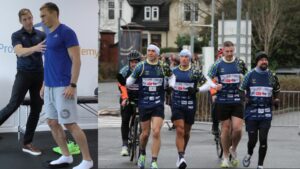
As the physio behind Kev’s incredible feat, we know what it takes to support runners through both performance and recovery.
Here’s how we help:
✅ A detailed, expert movement and strength assessment
✅ Hands-on treatment to reduce irritation or discomfort
✅ Identification of overloaded or underperforming muscles
✅ A personalised rehab plan tailored to your goals and running style
Our clinics are conveniently located inside gyms, meaning we can assess you in the environment you train in, use the equipment you’re familiar with, and provide guidance that directly applies to your workouts.
We’ve helped hundreds of runners across Huddersfield and Denby Dale recover from leg pain, run pain-free, and stay injury-free long term.
Being sore after running doesn’t have to slow you down. With the right recovery tools and expert support, you can train smarter, avoid injuries, and keep progressing.
Whether you’re struggling with calf, hamstring, glute, or knee pain, our physiotherapists in Huddersfield, Denby Dale, Leeds or Saddleworth can assess your condition, create a personalised plan, and help you get back to running safely and pain-free.
Book your appointment today at our clinics, or call us at 01484 443173. Start your journey to a stronger, pain-free run today!